
Introduction
Agriculture is the backbone of Pakistan’s economy, employing nearly half of the country’s workforce and contributing significantly to its GDP. However, the sector faces numerous challenges, including:
- Water scarcity
- Soil degradation
- Crop diseases
- Limited access to markets
- Inefficient supply chain management
Artificial intelligence (AI) can help address these issues and improve agricultural productivity. In this blog, we’ll explore AI applications in Pakistani agriculture and their potential to transform farming practices.
Precision Farming
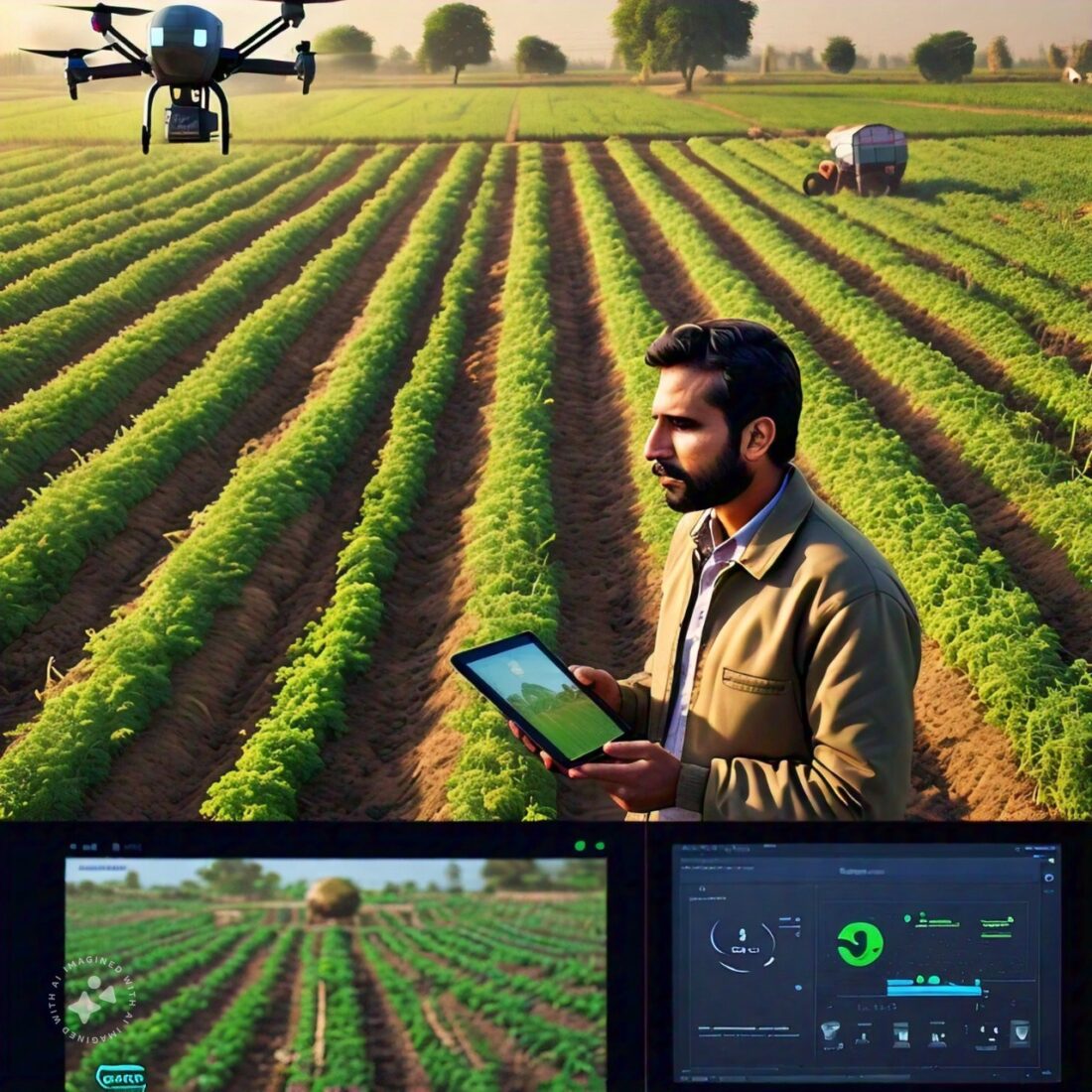
Precision farming uses AI-powered sensors, drones, and satellite imaging to optimize crop yields and reduce waste. AI algorithms analyze data on:
- Soil moisture
- Temperature
- Crop health
- Weather patterns
enabling farmers to make data-driven decisions.

- Benefits:
- Increased crop yields
- Reduced water consumption
- Minimized fertilizer use
- Improved resource allocation
- Pakistani example: The University of Agriculture, Faisalabad, has developed a precision farming system using drones and AI to monitor crop health.
Crop Disease Detection
AI-powered systems can detect crop diseases early, enabling farmers to take action before they spread.
- Benefits:
- Reduced crop losses
- Minimized pesticide use
- Improved food security
- Enhanced decision-making
- Pakistani example: The Pakistan Agricultural Research Council has developed an AI-based system to detect cotton leaf curl virus.

Weather Forecasting
AI-powered weather forecasting systems provide accurate predictions, enabling farmers to plan:
- Planting
- Irrigation
- Harvesting
- Benefits:
- Improved crop yields
- Reduced weather-related losses
- Enhanced decision-making
- Better resource allocation
- Pakistani example: The Pakistan Meteorological Department uses AI to predict weather patterns, helping farmers prepare for extreme weather events.

Supply Chain Optimization
AI optimizes supply chain management, reducing food waste and improving market access for farmers.
- Benefits:
- Increased farmers’ income
- Reduced food waste
- Improved food availability
- Enhanced market access
- Pakistani example: The Punjab government has launched an AI-powered platform to connect farmers with markets and reduce food waste.

Farm Robotics
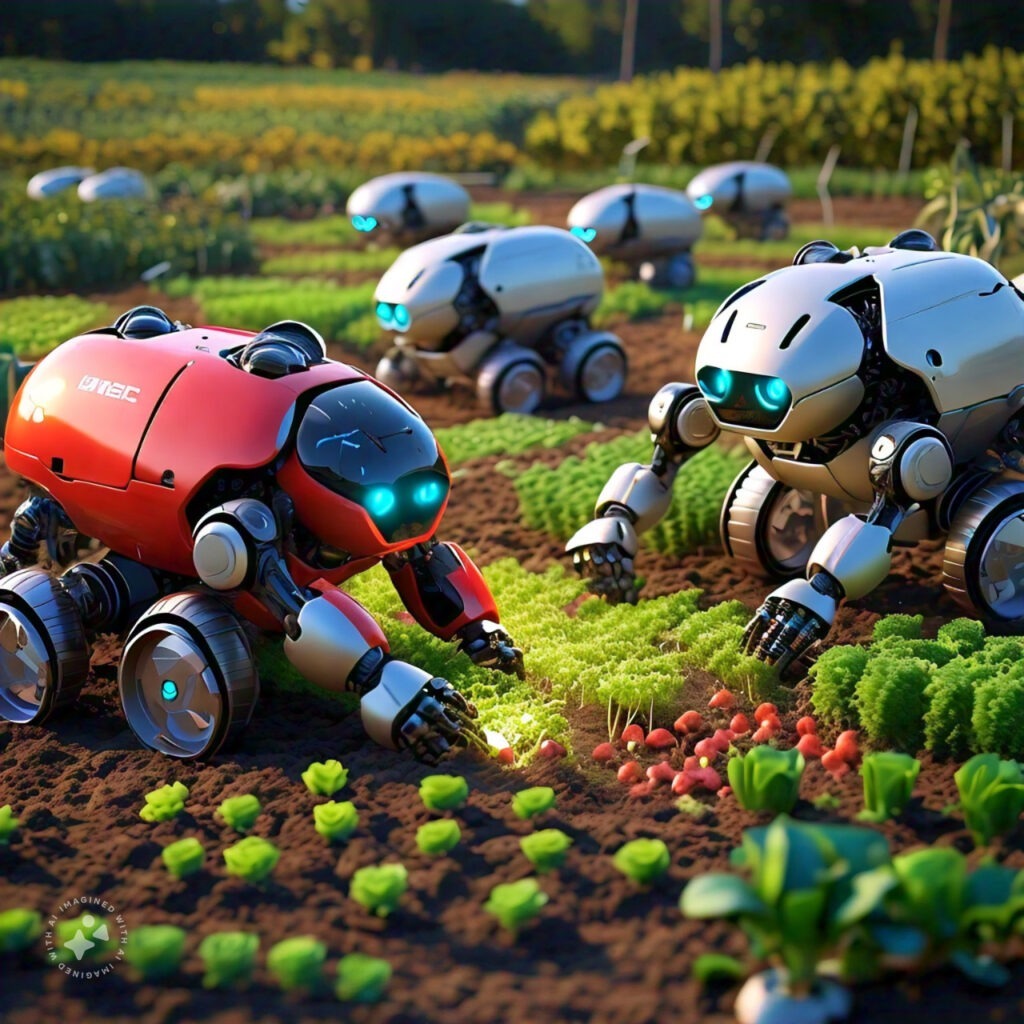
AI-powered farm robots automate tasks such as:
- Planting
- Irrigation
- Harvesting
- Benefits:
- Improved efficiency
- Reduced labor costs
- Enhanced productivity
- Better crop monitoring
- Pakistani example: The National University of Sciences and Technology has developed an AI-powered farm robot for automating farming tasks.
Challenges and Opportunities
While AI has the potential to transform Pakistani agriculture, challenges remain, including:
- Limited infrastructure: Inadequate internet connectivity and digital literacy hinder AI adoption.
- Data scarcity: Limited data availability and quality hinder AI model development.
- Regulatory framework: Lack of regulations and standards for AI in agriculture.
- Training and education: Limited training and education programs for farmers and agricultural professionals.
Conclusion
AI applications in Pakistani agriculture can improve crop yields, reduce waste, and enhance decision-making. However, addressing infrastructure, data, and regulatory challenges is crucial for widespread adoption. By leveraging AI, Pakistan can transform its agricultural sector, ensuring food security and economic growth.
Future Directions
- Increased investment: In AI research and development for agriculture.
- Public-private partnerships: Collaboration between government, industry, and academia.
- Training and education: Programs for farmers and agricultural professionals.
- Regulatory framework: Development of regulations and standards for AI in agriculture.
5 comments
TMail
August 19, 2024 at 12:14 am
The level of my appreciation for your work mirrors your own enthusiasm. Your sketch is visually appealing, and your authored material is impressive. Yet, you appear to be anxious about the possibility of moving in a direction that may cause unease. I agree that you’ll be able to address this matter efficiently.
real estate guidelines
August 24, 2024 at 4:00 pm
Real Estate I just like the helpful information you provide in your articles
Techno rozen
August 26, 2024 at 2:56 am
Techno rozen Hi there to all, for the reason that I am genuinely keen of reading this website’s post to be updated on a regular basis. It carries pleasant stuff.
Mygreat learning
August 26, 2024 at 11:23 am
Mygreat learning Awesome! Its genuinely remarkable post, I have got much clear idea regarding from this post . Mygreat learning
Simply sseven
September 12, 2024 at 10:54 pm
Simply Sseven This was beautiful Admin. Thank you for your reflections.