Circular Economy in Pakistan: Complete Guide (Powerful Insights for 2026)
Introduction
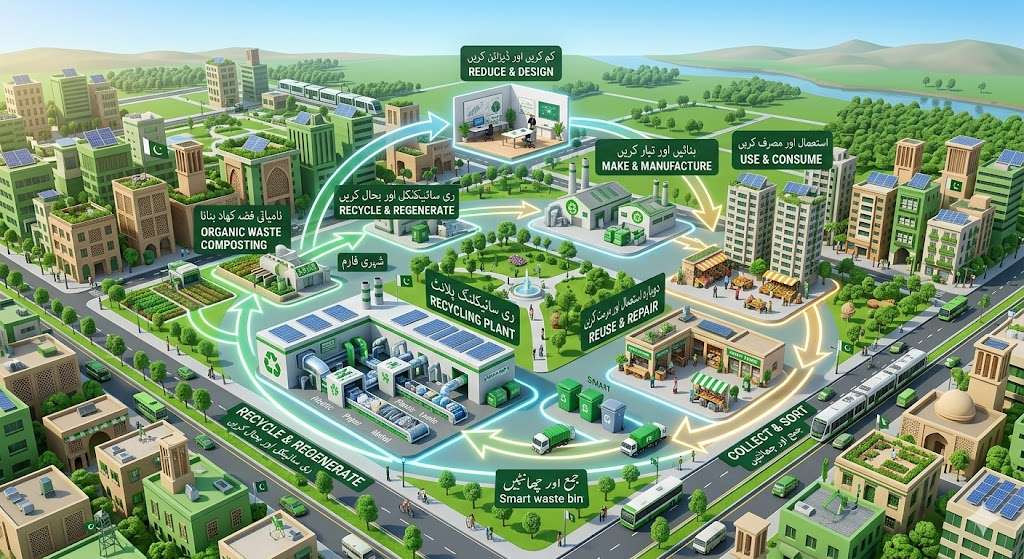
The concept of circular economy in Pakistan is gaining attention as the country faces rising environmental challenges, waste management issues, and resource scarcity. Unlike the traditional linear model of “take, make, dispose,” a circular economy focuses on reducing waste, reusing materials, and regenerating resources.
Pakistan generates millions of tons of waste annually, yet only a small percentage is formally recycled . This makes the transition toward a circular system not just important—but powerful for sustainable growth.
What is Circular Economy in Pakistan?
The circular economy in Pakistan is a system that promotes:
- Reducing resource use
- Reusing materials
- Recycling waste into new products
This approach helps extend product lifecycles and minimizes environmental damage. It replaces the outdated linear system with a regenerative model focused on sustainability and efficiency .
Why Circular Economy Matters in Pakistan
Pakistan is facing:
- Rapid population growth
- Industrial expansion
- Poor waste management systems
These factors have increased pollution and resource depletion. The circular economy offers a solution by turning waste into value and improving economic resilience .
Circular Economy in Pakistan Example
Here are real-world circular economy in Pakistan examples:
1. Informal Recycling Sector
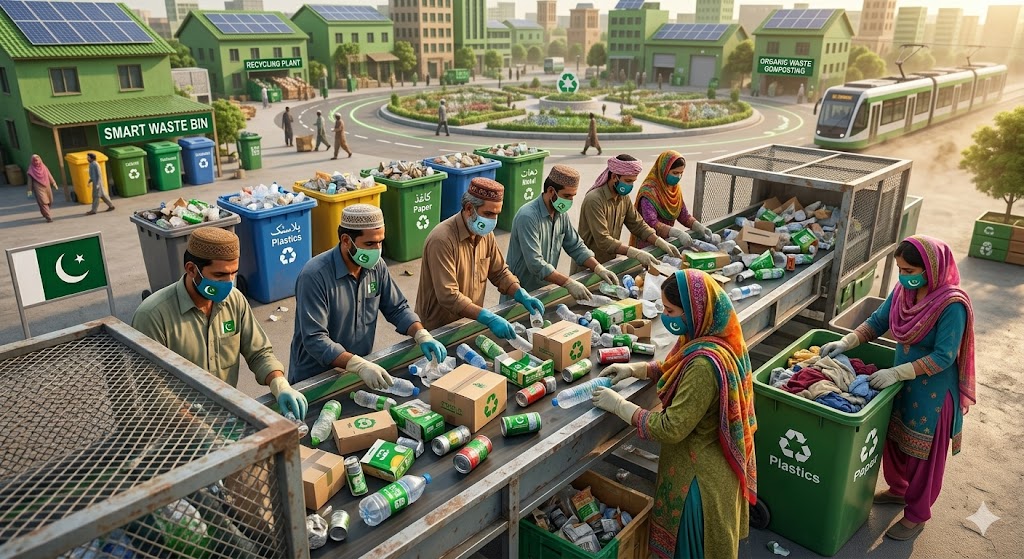
Pakistan already has a strong informal recycling system where waste pickers collect, sort, and sell recyclable materials. This system supports thousands of livelihoods and keeps materials in circulation .
2. Textile Recycling Industry
Old clothes are reused, resold, or converted into industrial materials. Pakistan’s textile sector plays a key role in circular practices.
3. Plastic-to-Product Conversion
Plastic waste is processed into pellets and reused to create new products, especially in industrial areas of Pakistan.
4. Repair and Reuse Culture
From refurbished cars to reused electronics, Pakistan already practices circularity at a grassroots level.
Circular Economy in Pakistan Benefits
The circular economy in Pakistan benefits are significant:

🌱 Environmental Benefits
- Reduces landfill waste
- Lowers pollution levels
- Conserves natural resources
💼 Economic Benefits
- Creates jobs in recycling and reuse sectors
- Reduces import dependency on raw materials
- Can contribute significantly to GDP growth
🔄 Social Benefits
- Supports low-income communities
- Promotes sustainable lifestyles
⚡ Efficiency Benefits
- Extends product life cycles
- Minimizes production costs
Challenges of Circular Economy in Pakistan
Despite its potential, the circular economy in Pakistan faces challenges:
- Lack of formal waste management systems
- Limited awareness among consumers
- Weak government policies and regulations
- Informal and unsafe recycling practices
Additionally, consumer preferences sometimes hinder adoption—for example, people may avoid products made from recycled materials .
Future of Circular Economy in Pakistan
The future of circular economy in Pakistan looks promising but requires action.
Key Trends:
- Government policies supporting sustainability
- Growth of green businesses
- Digital technologies like AI improving waste management
- Investment in recycling infrastructure
Pakistan is at a critical point where adopting circular practices can lead to long-term sustainability and economic resilience .
How Pakistan Can Achieve a Circular Economy
To fully implement circular economy in Pakistan:
1. Policy Development
Government must introduce strict regulations and incentives.
2. Public Awareness
Educating people about recycling and sustainability is crucial.
3. Business Innovation
Companies should adopt eco-friendly production methods.
4. Investment in Technology
Use AI, IoT, and smart systems for waste management.
👉 Read more: Circular Economy Initiatives in Pakistan’s Construction Sector.
FAQs
1. What is circular economy in Pakistan?
Circular economy in Pakistan is a system focused on reducing waste, reusing materials, and recycling resources to create a sustainable economy.
2. What are examples of circular economy in Pakistan?
Examples include informal recycling systems, textile reuse, plastic recycling, and repair culture.
3. What are the benefits of circular economy in Pakistan?
It reduces waste, creates jobs, improves resource efficiency, and supports economic growth.
4. What is the future of circular economy in Pakistan?
The future is promising with policy support, technological innovation, and growing awareness of sustainability.
5. Why is circular economy important for Pakistan?
It helps tackle pollution, resource scarcity, and economic instability while promoting sustainable development.